CALYPSO-1 is a collaborative project to design, build, and recover a student-built rocket that exceeds Mach 1. The design emphasizes low cost, custom fabrication, and recorded flight data. Robert Werner and I share the design, modeling, and fabrication work, collaborating across the full project.
Shared engineering work
01
Mission & requirements
The project targets flight above Mach 1 while maintaining stability and structural integrity. Additional objectives include recording altitude and velocity, capturing onboard video, GPS tracking, and dual-deployment recovery.
02
Design tradeoffs
We jointly develop the design, models, and fabrication approach. Our preliminary component budget compares candidate materials, parts, mass, and cost. The design considers a fiberglass airframe, G10 fiberglass fins, and a custom polycarbonate nose cone alongside flight instrumentation and recovery hardware.
03
Analysis & verification plan
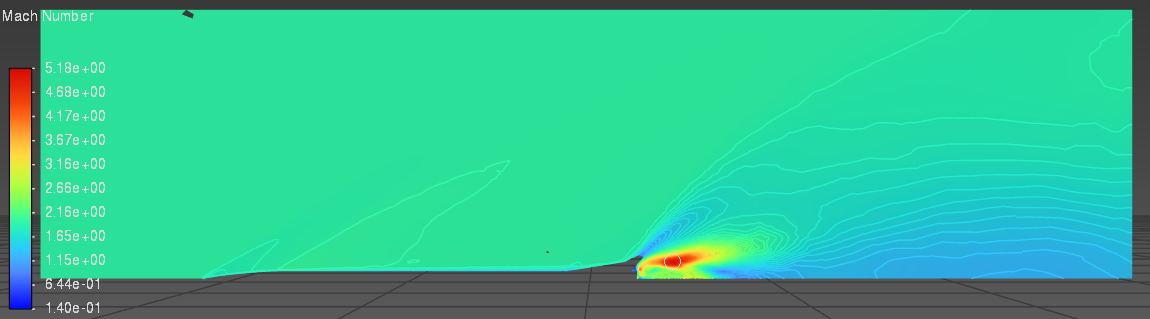
The project materials include ANSYS flow visualizations. The documented test plan calls for flight and recovery-drift simulations, aerodynamic-load and structural analysis, component tests, final mass and center-of-gravity measurements, and comparison of flight data with predictions.
ANALYSIS IN PROGRESS
Visualizing the flow field.
Mach-number contour from the CALYPSO-1 project materials. Simulation visualization; not measured flight performance. Select the image to inspect it at full size.
The flow-field image provides a view of the current analysis work. Its color scale represents local simulated flow conditions, not the rocket’s achieved flight speed.
PROJECT GALLERY
Design and hardware.
Select any image to view it at full size.
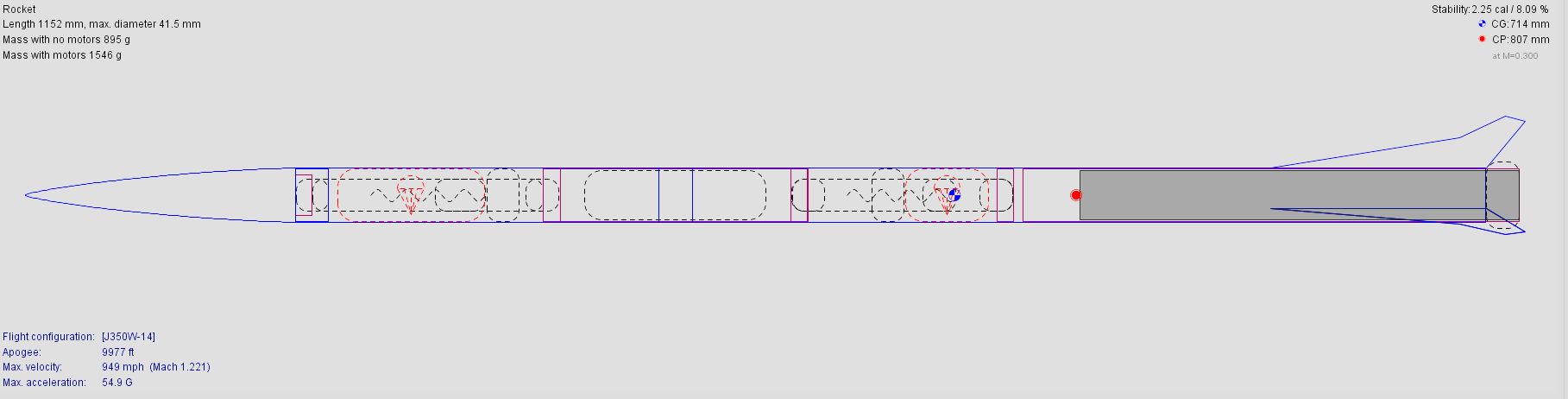
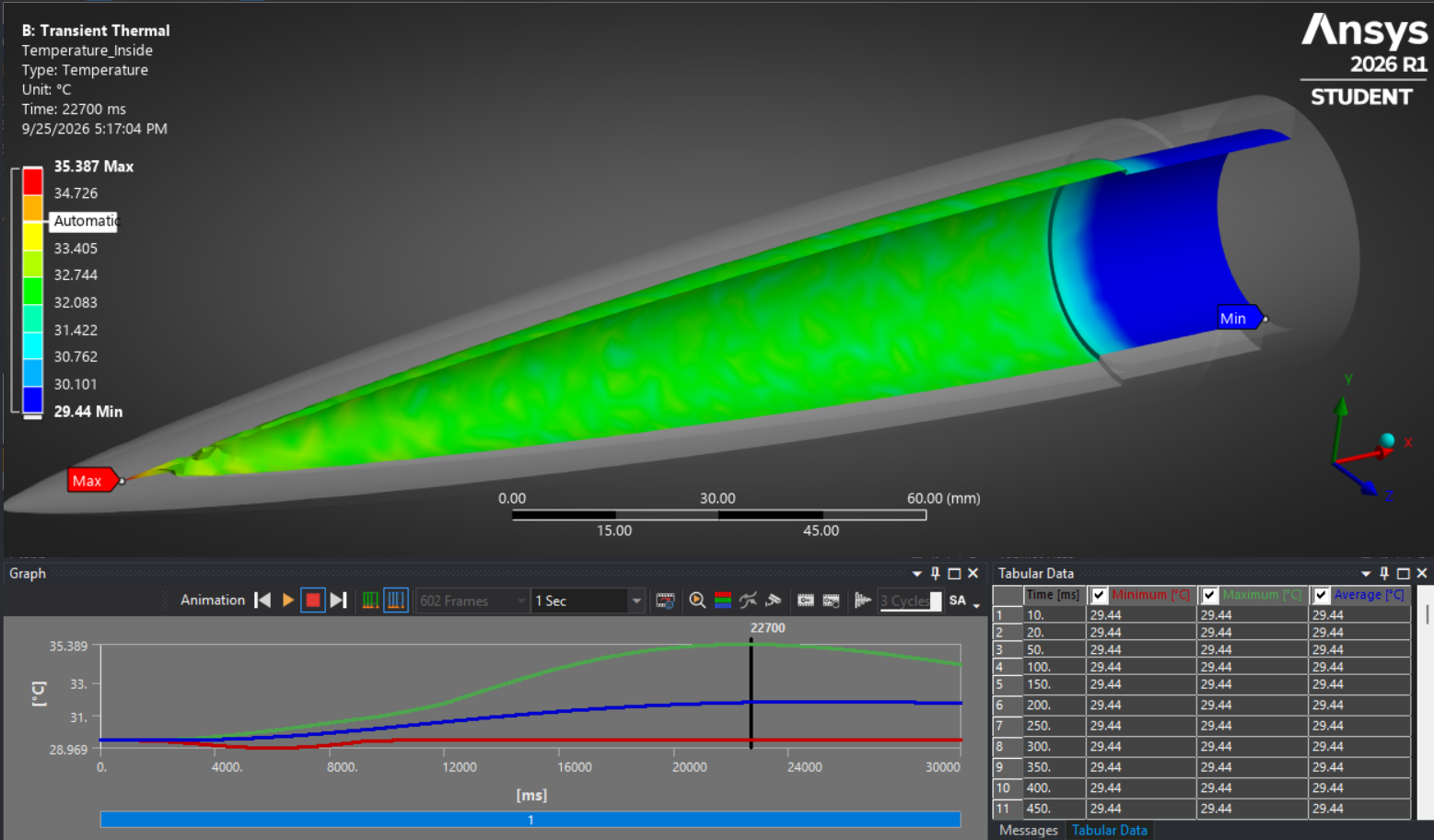
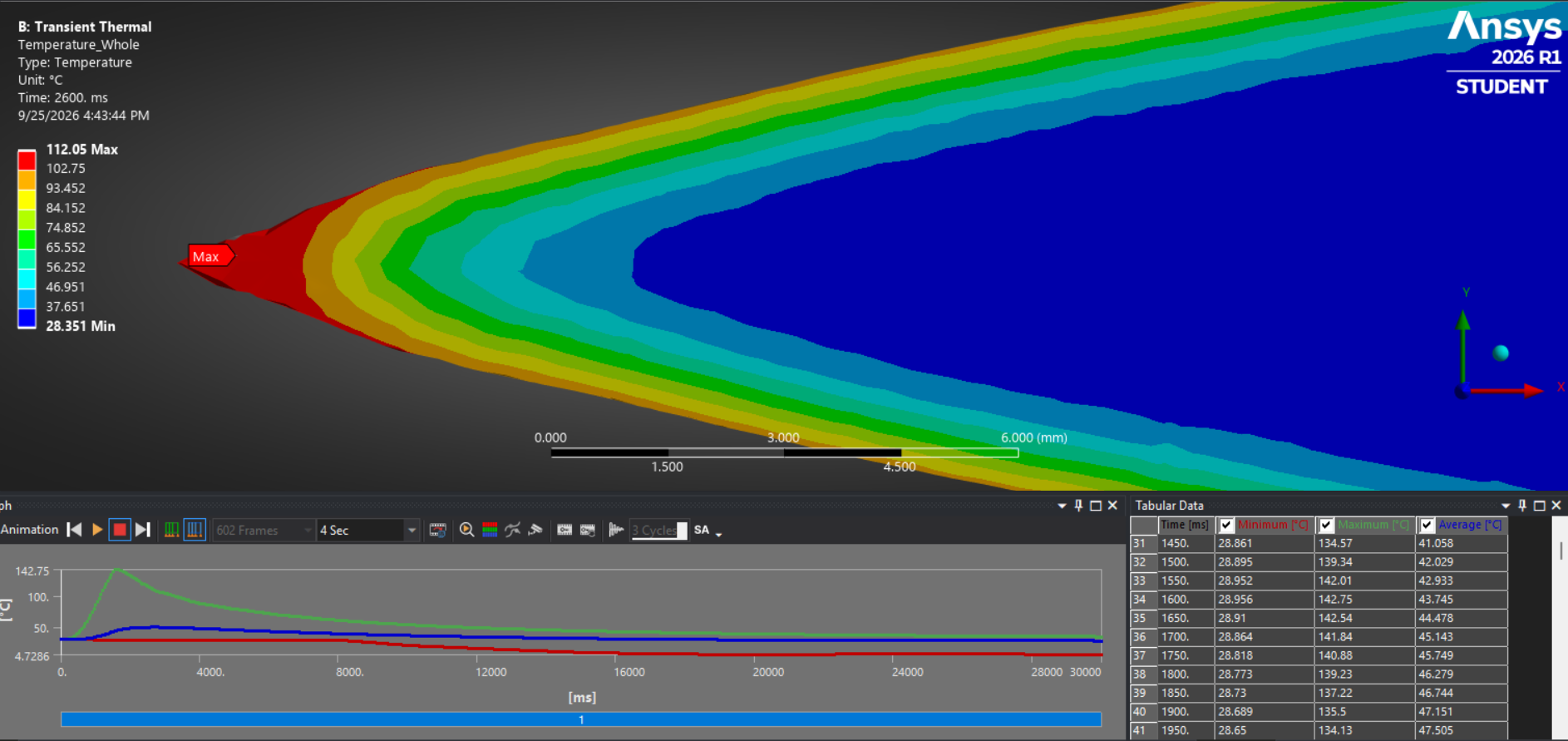
CALYPSO-1 OpenRocket configuration and simulated flight performance.ANSYS transient thermal simulation of the nose-cone interior.ANSYS transient thermal simulation showing temperature distribution at the nose.
THERMAL ANALYSIS
Transient temperature simulations.
Three supplied ANSYS animations. Simulation results, not flight measurements.
In development. Supersonic flight and successful recovery are project objectives. The current portfolio presents design documentation and simulation material, rather than a completed flight-test result.